
Ever shown up to a potluck without a dish and panicked in the parking lot? Pasta salad is the answer you wish you’d thought of sooner. It’s cheap, it comes together in under 30 minutes, it feeds a crowd, and it actually tastes better the next day — which makes it one of the few dishes you can genuinely make ahead without stress. Whether you’re packing lunches for the week, rounding out a backyard barbecue, or just craving something cold, crunchy, and tangy on a hot day, this pasta salad recipe delivers every time. Today, I’ll walk you through everything you need — ingredients, technique, storage, and the small details that separate a soggy, bland bowl of noodles from a pasta salad people actually ask you to bring again.
What Makes a Great Pasta Salad?
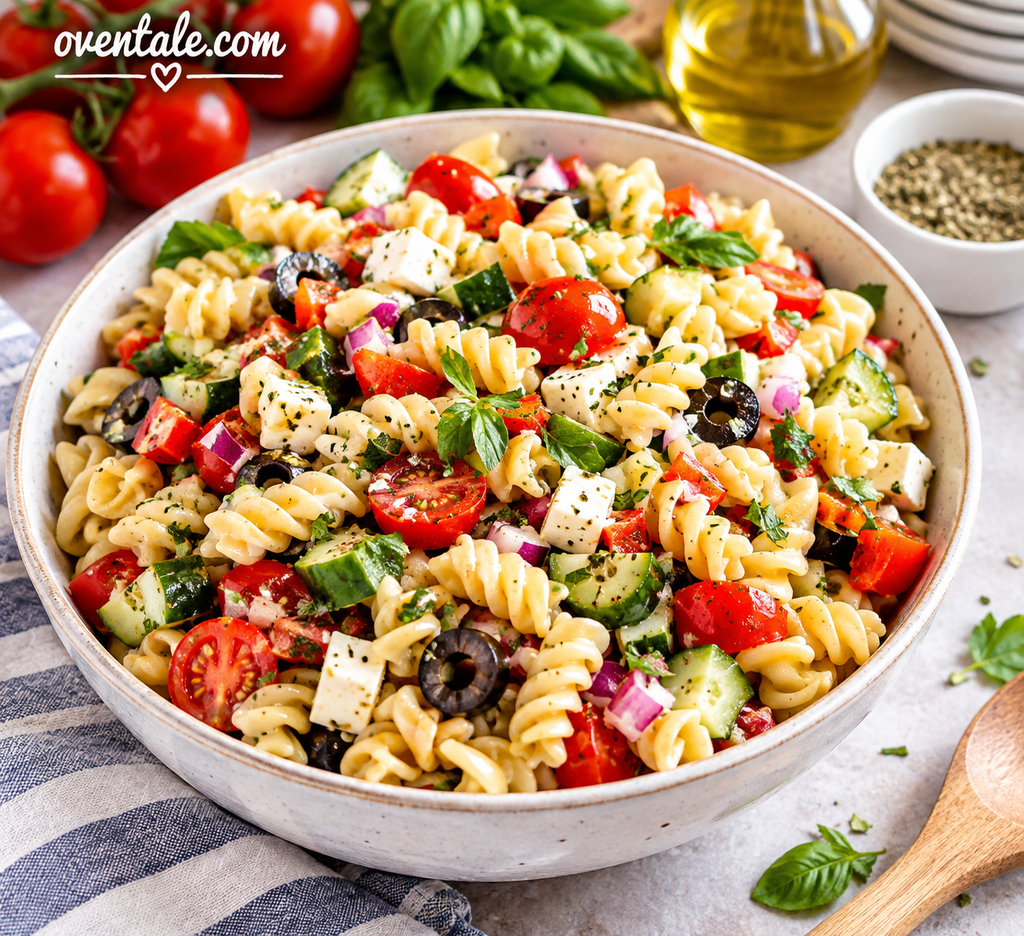
At its core, pasta salad is a cold (or room-temperature) dish built from cooked pasta, a mix of vegetables and proteins, and a punchy dressing that ties it all together. The best versions balance several textures and flavors at once rather than leaning on just mayo and noodles.
Key Features:
- Versatile: Works as a side dish, a main course, or a packed lunch.
- Make-Ahead Friendly: Improves in flavor after chilling for a few hours.
- Customizable: Easily adapted to what’s in your fridge or pantry.
- Crowd-Pleasing: A reliable pick for potlucks, cookouts, and holidays.
Ingredients Needed for Pasta Salad
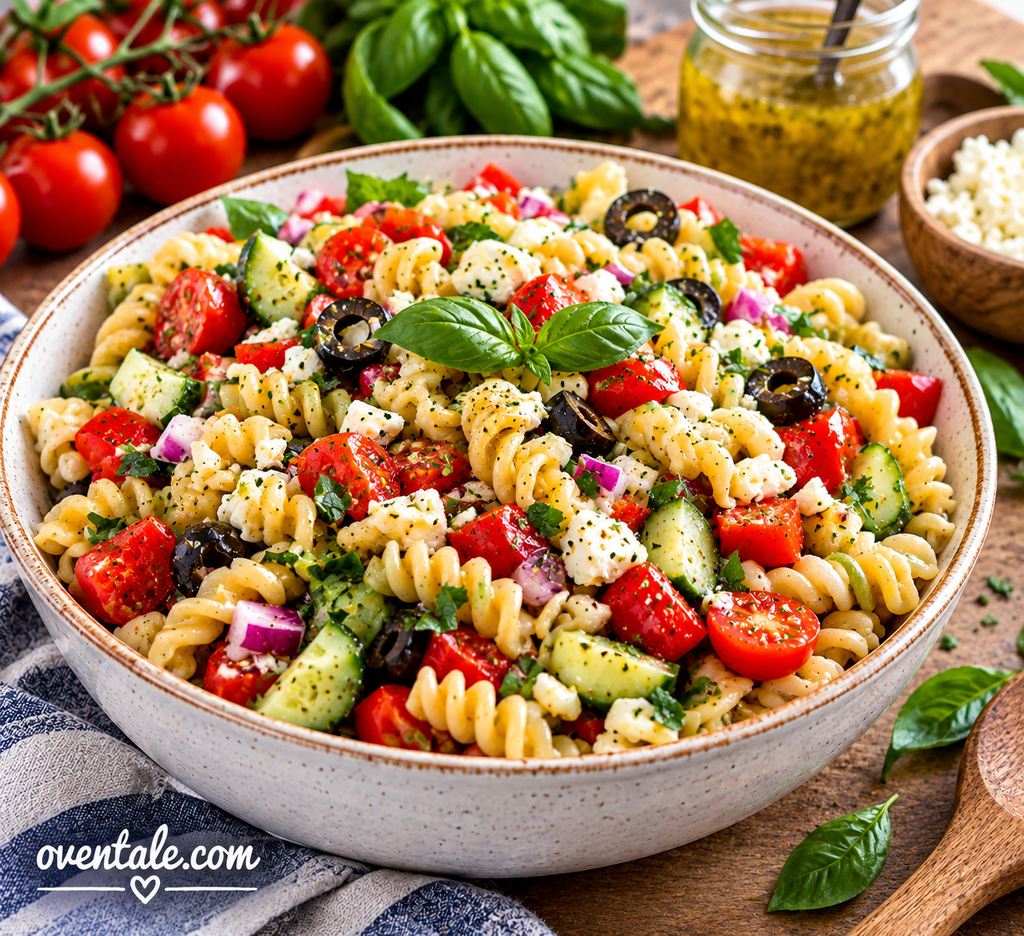
Having the right ingredients on hand is the foundation of a great pasta salad. Here’s a full breakdown, organized for easy shopping.
| Ingredient | Quantity/Size | Notes |
|---|---|---|
| Short Pasta (Rotini, Penne, or Fusilli) | 1 lb (about 16 oz) | Ridged shapes hold dressing best |
| Cherry Tomatoes | 1½ cups, halved | Or diced regular tomatoes |
| Cucumber | 1 medium, diced | English cucumber has fewer seeds |
| Red Onion | ½ cup, finely diced | Soak in cold water to mellow the bite |
| Bell Pepper | 1 cup, diced | Any color; red adds sweetness |
| Black Olives | ½ cup, sliced | Optional, but adds briny depth |
| Mozzarella Balls or Cubed Cheese | 1 cup | Feta also works well |
| Salami or Pepperoni (optional) | ½ cup, diced | For a heartier, main-dish version |
| Fresh Parsley or Basil | ¼ cup, chopped | Adds brightness and color |
| Olive Oil | ½ cup | Base of the dressing |
| Red Wine Vinegar | ¼ cup | Or apple cider vinegar |
| Italian Seasoning | 1 tablespoon | Dried oregano and basil work too |
| Garlic | 2 cloves, minced | Fresh gives the best flavor |
| Salt and Black Pepper | To taste | Season in layers, not just at the end |
Additional Tools
- Large pot for boiling pasta
- Colander
- Large mixing bowl
- Small jar or bowl for dressing (a jar with a lid is great for shaking)
- Cutting board and sharp knife
- Airtight container for storage
Making Pasta Salad Step-by-Step
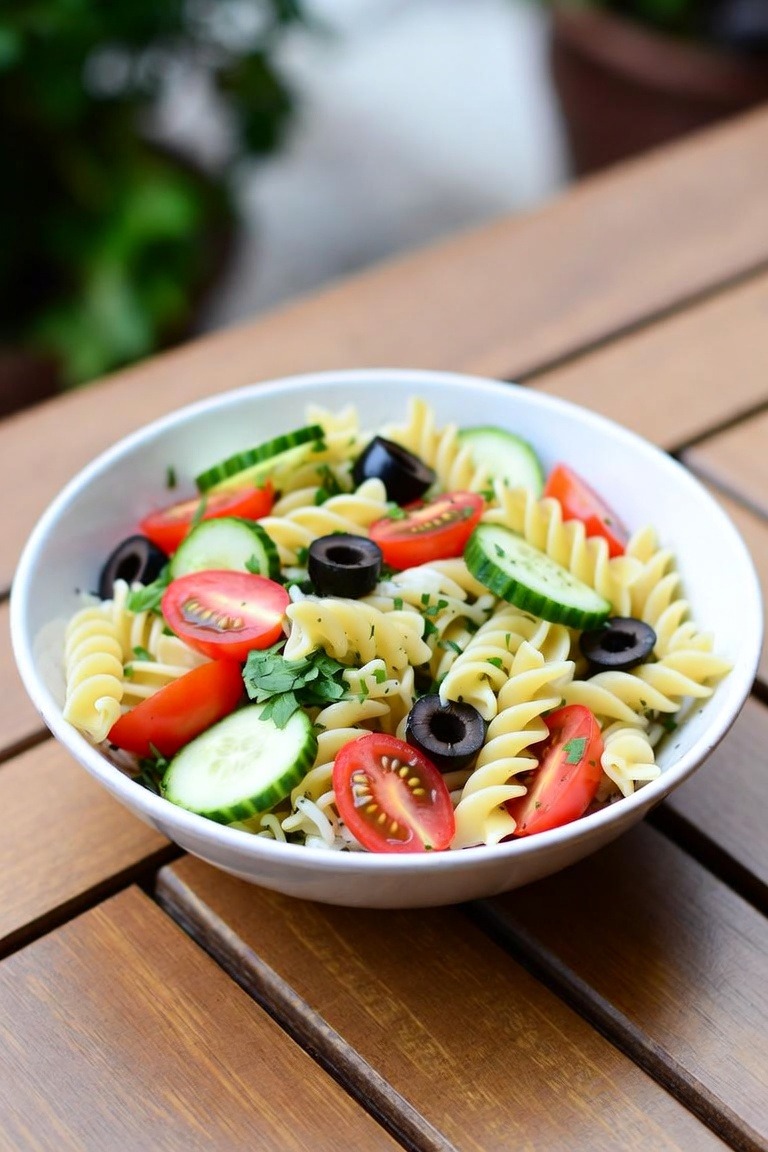
With everything prepped, here’s exactly how to put it together for the best texture and flavor.
Step 1: Cook the Pasta
- Bring a large pot of generously salted water to a boil.
- Cook the pasta according to package directions until just al dente — it will soften slightly more as it sits in the dressing.
- Drain and rinse briefly under cold water to stop the cooking and cool it down quickly.
Step 2: Make the Dressing
- In a jar or small bowl, combine olive oil, red wine vinegar, minced garlic, Italian seasoning, salt, and pepper.
- Shake or whisk vigorously until the dressing is well combined and slightly thickened.
Step 3: Prep the Vegetables and Extras
- While the pasta cooks, dice the cucumber, bell pepper, and red onion.
- Halve the cherry tomatoes and slice the olives.
- Cube the cheese and dice the salami, if using.
Step 4: Combine Everything
- In a large mixing bowl, add the cooled pasta first.
- Pour about two-thirds of the dressing over the pasta and toss to coat evenly — this helps the pasta absorb flavor before it’s crowded with other ingredients.
Step 5: Add the Mix-Ins
- Add the tomatoes, cucumber, onion, bell pepper, olives, cheese, and salami to the bowl.
- Gently toss everything together until evenly distributed.
Step 6: Finish and Chill
- Pour in the remaining dressing and toss once more.
- Fold in the fresh herbs.
- Cover and refrigerate for at least 1 hour before serving to let the flavors meld.
Step 7: Taste and Adjust
- Just before serving, taste and adjust with extra salt, pepper, or a splash of vinegar if the pasta has soaked up a lot of the dressing.
Tips for Success in Making Pasta Salad
- Don’t Overcook the Pasta: Slightly firm pasta holds up much better than mushy pasta once it’s tossed with dressing and chilled.
- Salt Your Pasta Water: This is your only chance to season the pasta itself, so don’t skip it.
- Dress It Twice: Tossing the warm pasta with some dressing first, then adding more later, prevents a dry salad.
- Cut Ingredients Uniformly: Similarly sized pieces make every bite balanced and look more polished.
- Let It Rest: Pasta salad almost always tastes better after an hour or two in the fridge — the flavors need time to combine.
Common Mistakes and How to Avoid Them
| Mistake | Solution |
|---|---|
| Mushy pasta | Cook just to al dente and rinse with cold water immediately after draining. |
| Bland flavor | Season the pasta water, dress the pasta while it’s still warm, and taste before serving. |
| Watery salad | Pat vegetables like cucumber and tomatoes dry before adding, and drain well after any rinsing. |
| Dry, clumpy salad the next day | Reserve a little extra dressing to stir in before serving leftovers. |
Variations to Make Your Pasta Salad Unique
- Greek-Style: Swap in feta, kalamata olives, and a lemon-oregano dressing.
- Creamy Version: Use a mayo-and-yogurt base instead of an oil-and-vinegar dressing for a classic picnic-style salad.
- Protein-Packed: Add grilled chicken, shrimp, or chickpeas to turn it into a full meal.
- Pesto Pasta Salad: Replace the vinaigrette with basil pesto thinned slightly with olive oil.
- Southwest Twist: Use corn, black beans, diced avocado, and a lime-cumin dressing.
Storage Tips
Store pasta salad in an airtight container in the refrigerator for up to 4 days. If it’s oil-based, a quick stir before serving redistributes the dressing. Avoid freezing — the vegetables and pasta both lose their texture once thawed.
Wrapping It Up: Your New Go-To Side Dish
Pasta salad is one of those recipes that rewards a little technique without demanding much effort — cook the pasta right, dress it in layers, use fresh ingredients, and let it chill so the flavors can come together. Once you’ve got the basic method down, it’s endlessly adaptable to whatever you have on hand or whatever theme your gathering calls for.
So grab a pot of water, start boiling, and get ready to bring the dish everyone asks you to make again!
Happy cooking — and remember, the best pasta salad is the one you make your own.